
by Nicholas Ribush
1975 was an amazing year for the (as-yet-unnamed) FPMT.
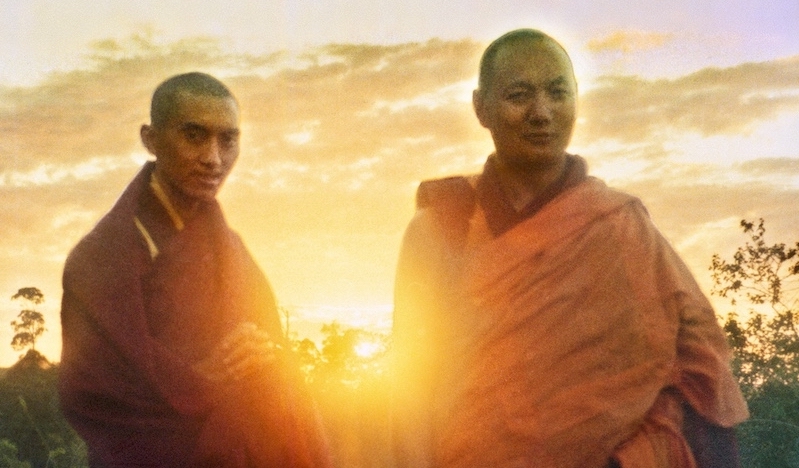
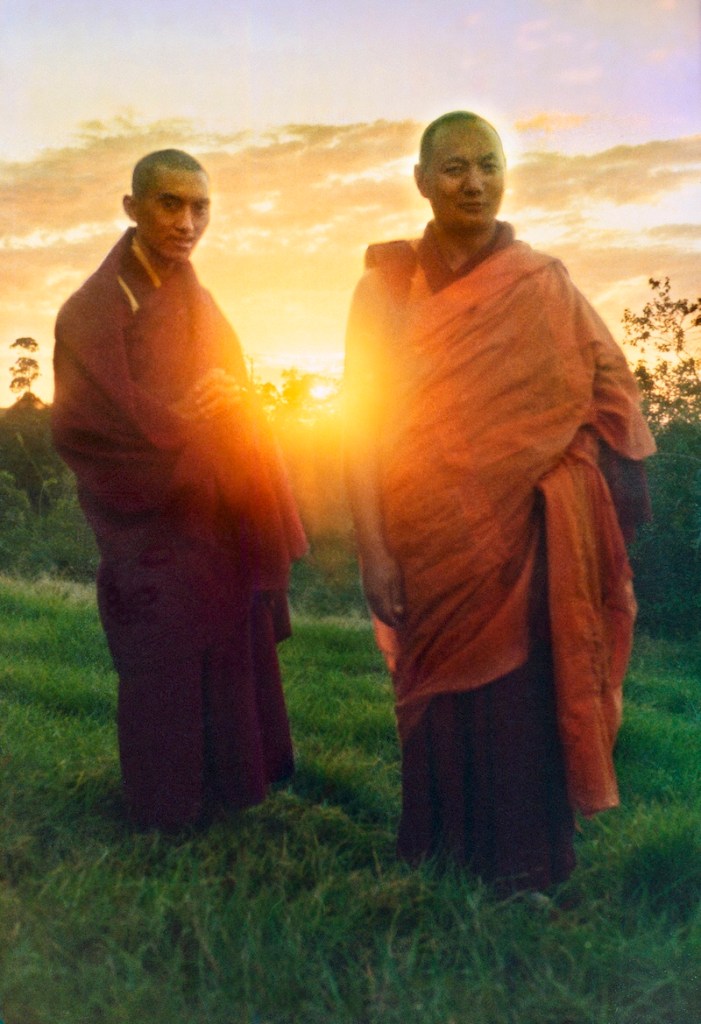
First, there was the enthronement of Yangsi Rinpoche in early January, followed by a visit and teaching by Gomchen Gampala, a manifestation of the great Thang Tong Gyalpo. At the end of January Lama Yeshe gave the International Mahayana Institute (IMI) monks and nuns a Manjushri initiation and a couple of weeks later a commentary on the practice.[1] Right after that, Lama Yeshe and Lama Zopa Rinpoche, accompanied by me as the roadie, set off on their second world tour.
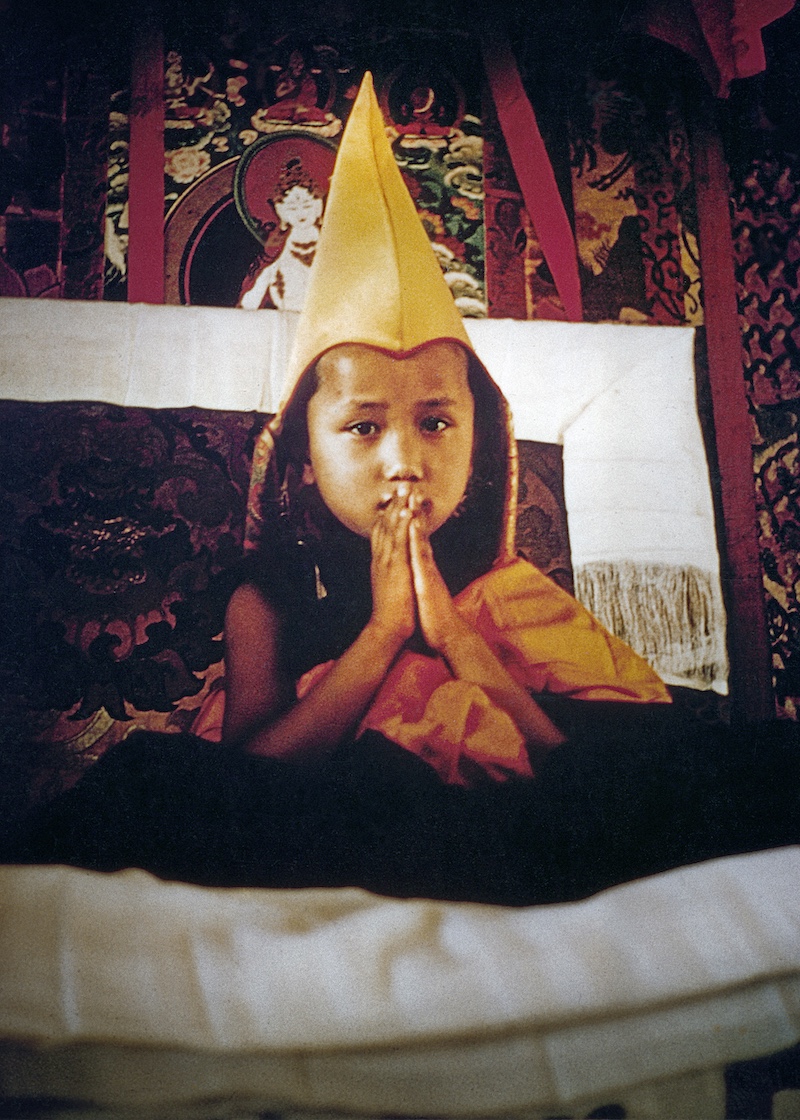
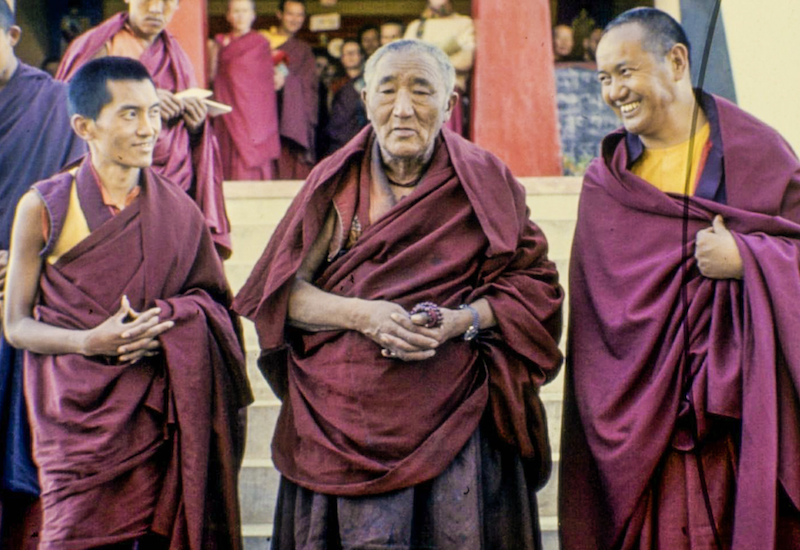
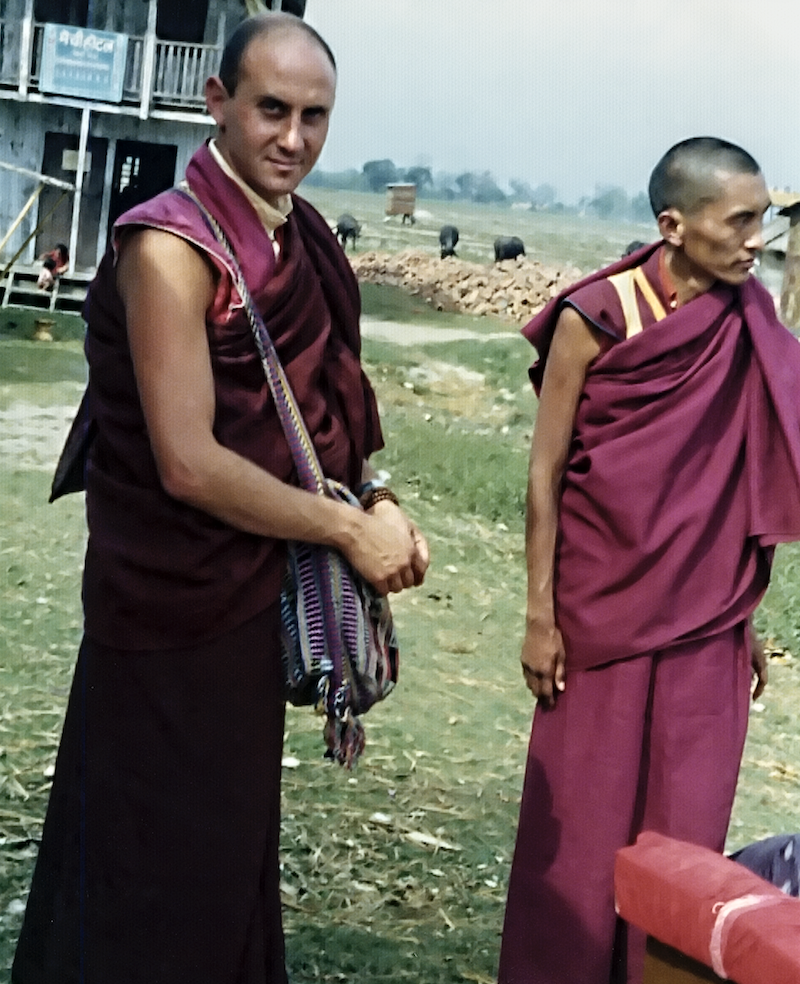
(Click on each photo to enlarge and see the caption)
First we went to Darjeeling to collect Rinpoche’s possessions left at Domo Geshe Rinpoche’s monastery in Ghoom, Samten Choeling, which is where they had met their first Western student, Zina, in 1967.
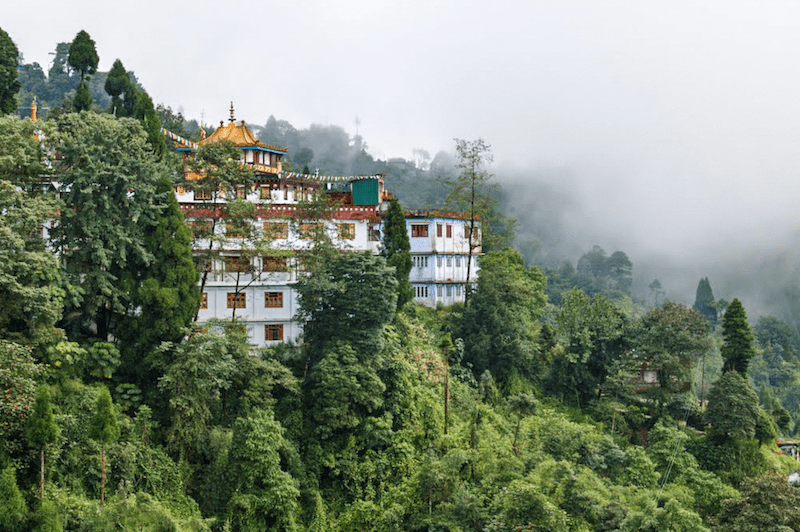
(All this, by the way, is told in great detail in Big Love: The Life and Teachings of Lama Yeshe.)
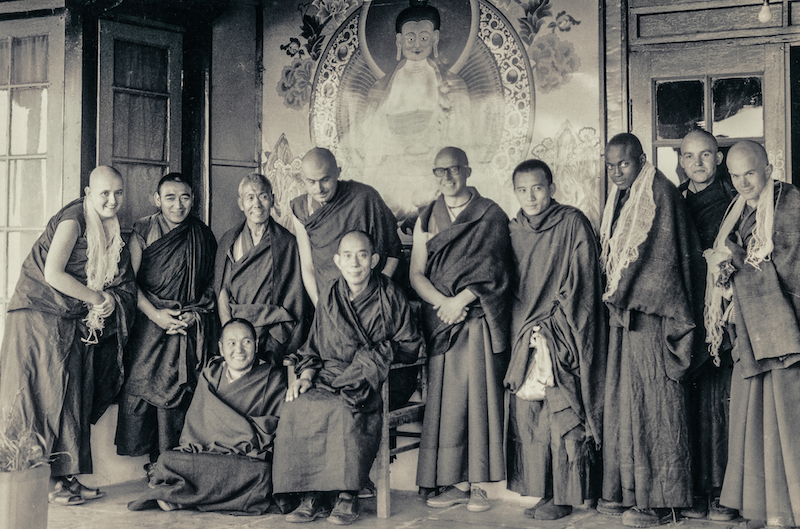
Then we flew to Dharamsala for the Lamas to ask His Holiness the Dalai Lama’s advice on the upcoming trip. At this time the second group IMI ordination took place when Lati Rinpoche ordained six Westerners. That was followed by a group IMI audience with His Holiness. On the 12th of March we left for Bangkok for a weekend seminar and a meeting with Geshe Tengye, who later became the resident teacher at Institut Vajra Yogini in France.


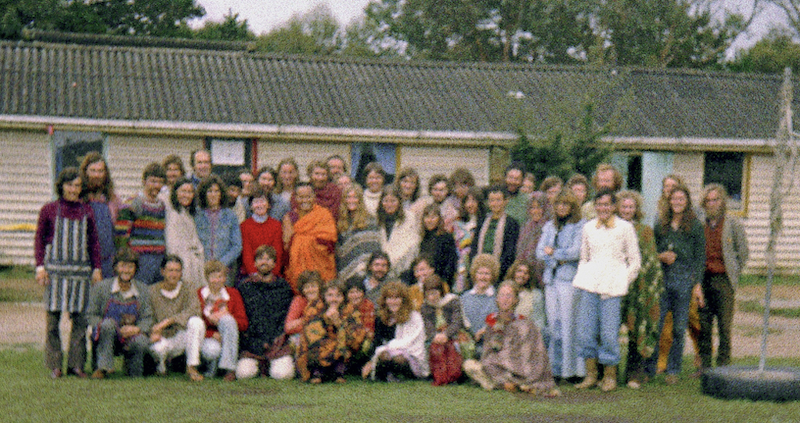
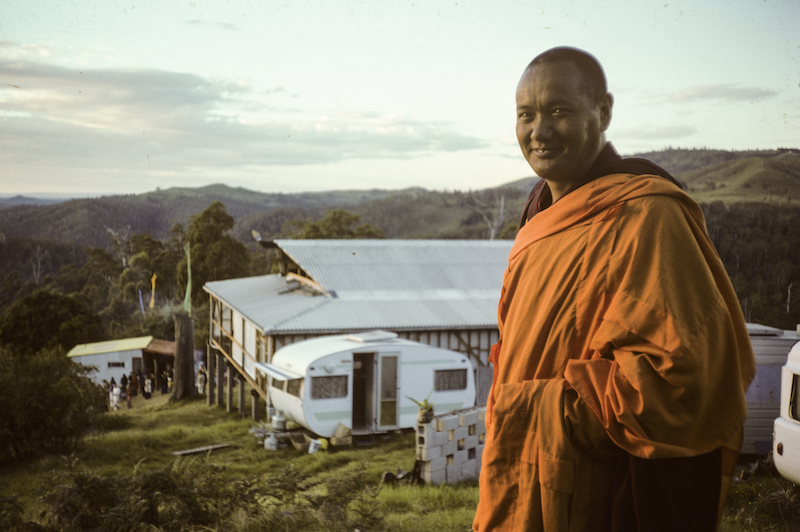
After that the Lamas went to Australia for courses in Melbourne, Sydney (which I gave) and their first teachings at Chenrezig Institute. In New Zealand, the seeds of Dorje Chang Institute were nourished. In June the Lamas flew to Los Angeles for a three-week course at Lake Arrowhead, which is where the energy for Vajrapani Institute began to be generated. Then there was a two-week course in Indiana, following which the Lamas went to stay with Geshe Sopa in Wisconsin for a few weeks.

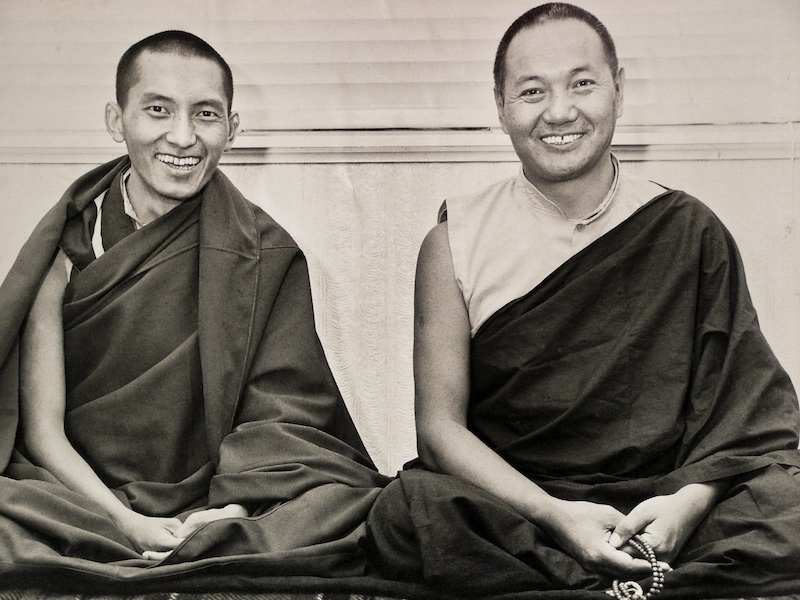
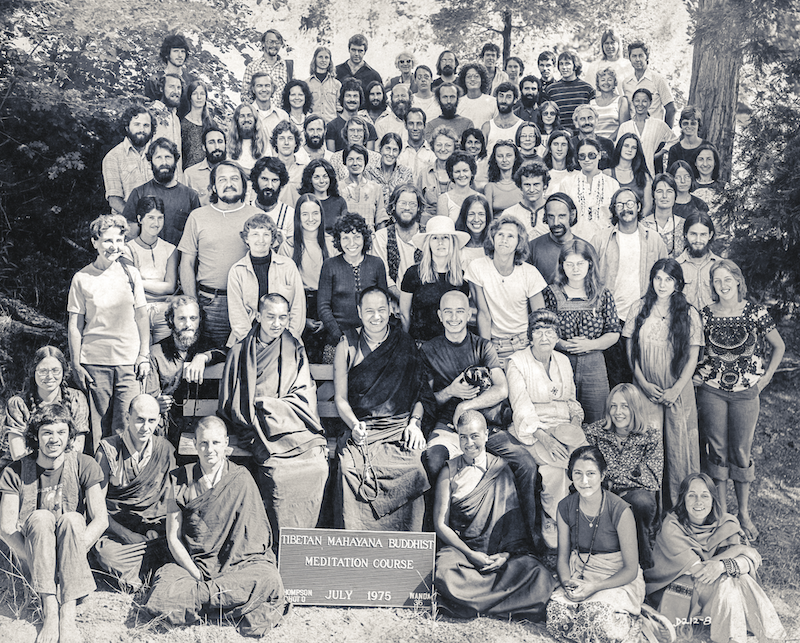
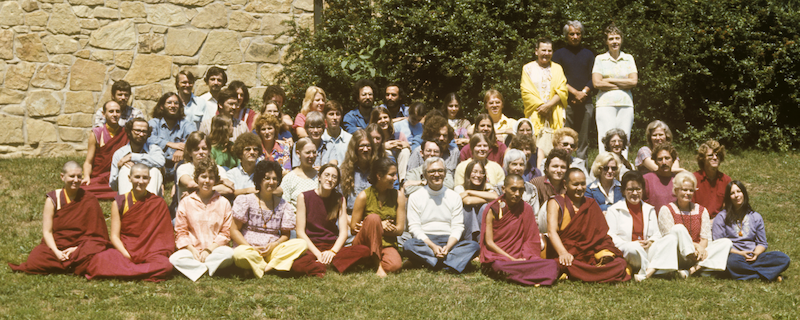
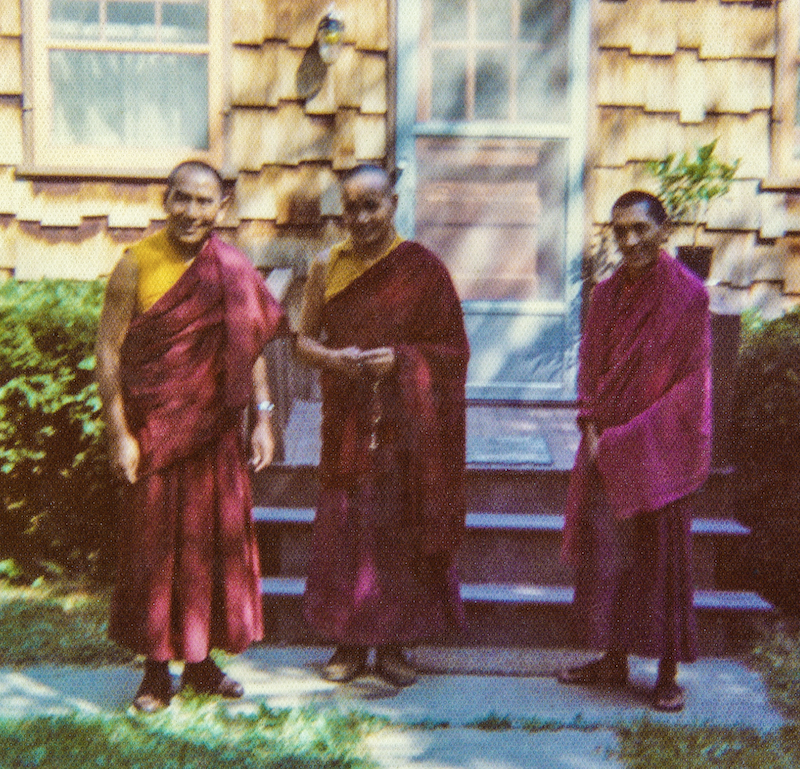
Then it was off to Europe, starting with a weekend seminar at Royal Holloway College, at which Manjushri Institute began. After that the Lamas taught a two-week course near Geneva and then drove to Eupilio in northern Italy, where Istituto Lama Tzong Khapa began, for another two-week course. Finally, the Lamas returned to India for another meeting with His Holiness and then back to Nepal for the eighth Kopan meditation course.
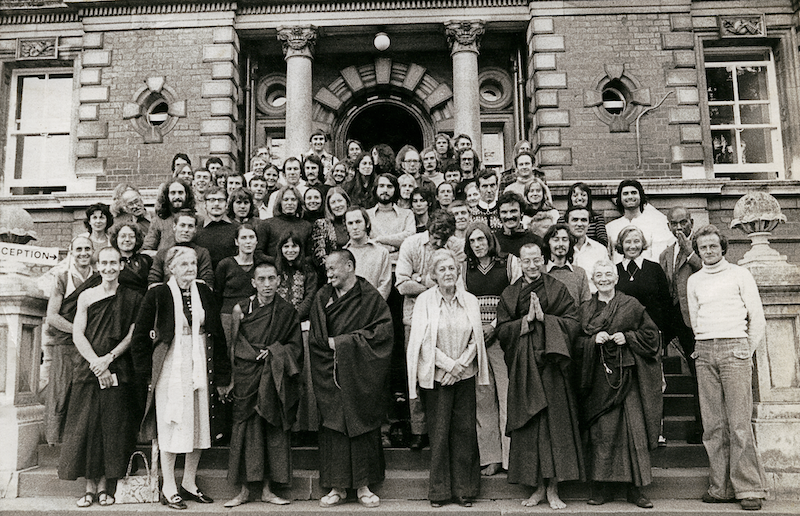
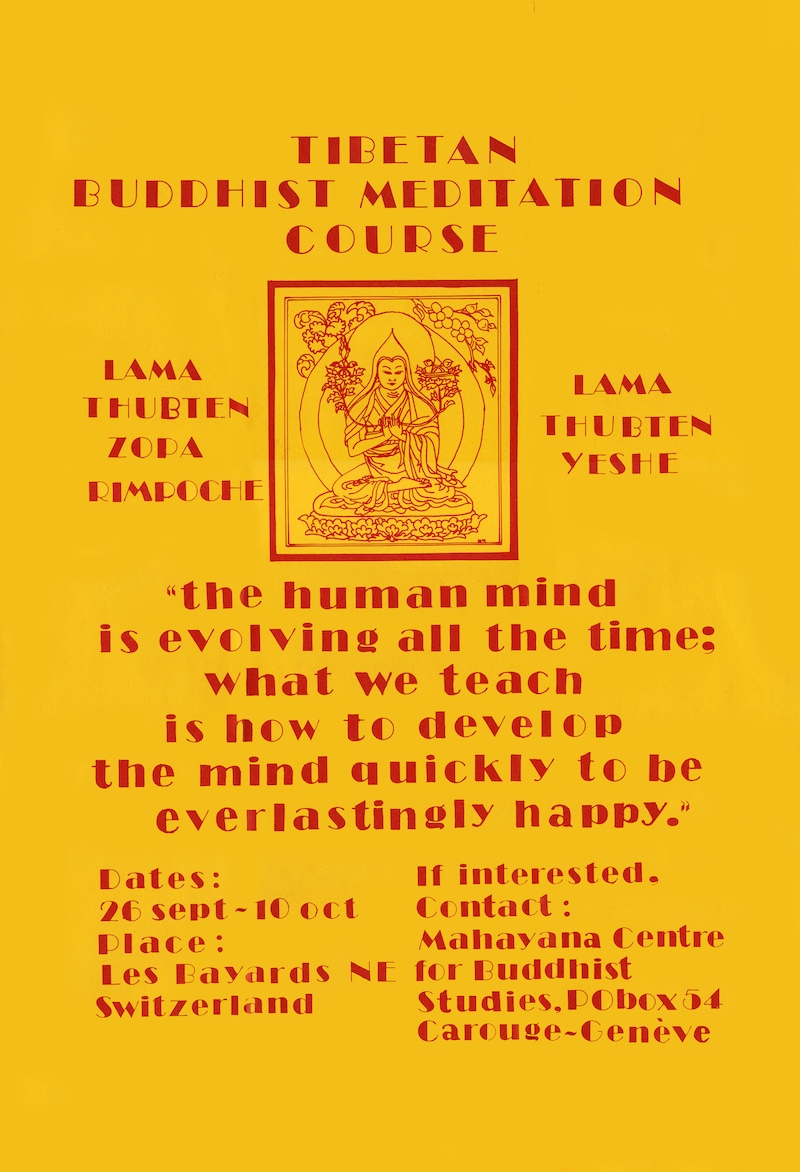
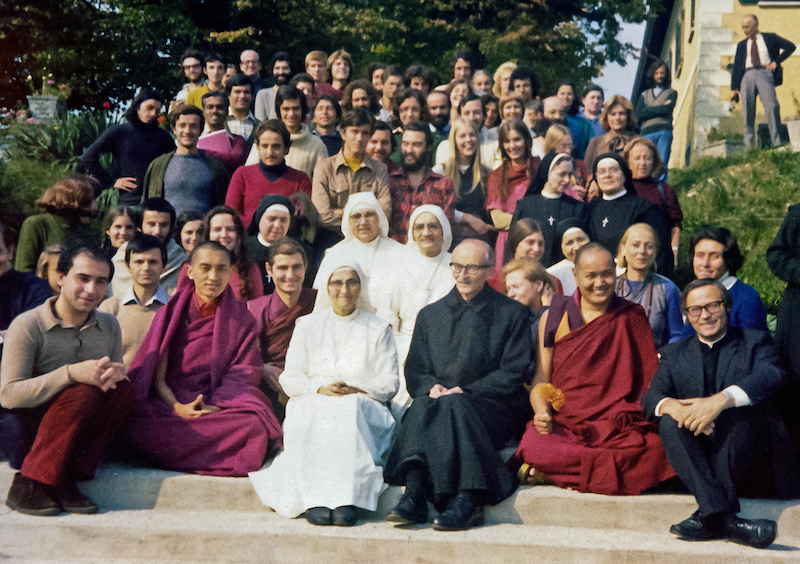
During this time away Lama had either consolidated or stimulated the creation of his first seven Western centers. That meant that along with Kopan, Lawudo Retreat Centre and Tushita Meditation Centre, Lama Yeshe now had ten centers under his spiritual care.
Fifty years ago this month, I was standing on the steps of the Kopan Gompa with Lama. He gazed into the distance, as if surveying with his mind’s eye his already wide-ranging Dharma works, and said, “We need an organization to keep this together.” Lama then named nine of his students who should meet regularly to discuss how to make this happen. He called us the “Central Coordinating Committee.” You can read here how and why Lama established the FPMT. I have also written a sort of personal commentary to this talk, published as Bamboo Through Concrete.

Although at this point there were not that many centers, there’s no doubt that Lama could see what was going to happen and how the newly named Foundation for the Preservation of the Mahayana Tradition would become one of the world’s largest international Buddhist organizations, and would therefore need clarity and coordination to evolve purely and in a way beneficial to all sentient beings.
Wisdom Publications also turns 50!
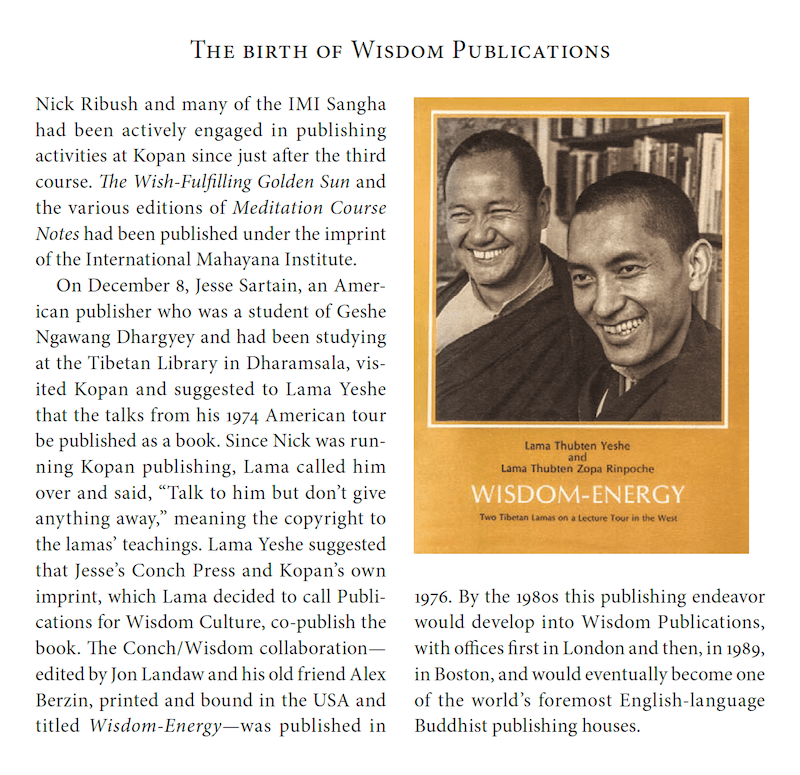
Not only was the FPMT as an organization founded in 1975. So was Wisdom Publications. The story is told briefly in Big Love, as is the evolution of Buddhist publishing in the West in my 2003 article Birth of a Buddhist Publishing Company.
From Big Love: The Life and Teachings of Lama Yeshe:
My own history with the FPMT began when I attended the third Kopan course in October 1972. This Road to Kopan Mandala article tells briefly how and why I got there. After the course we took a group photo on top of the hill, after which I said to Rinpoche, “Thank you, Rinpoche, for changing my life.” I hadn’t fully accepted the teachings but I knew I couldn’t leave until I had found out more. At the bottom of the hill I said to Anila Ann McNeil, “I want to do Dharma but I don’t have that much money. How will I support myself?” She looked at me as if I was a bit simple and said, “Oh, if you give yourself to the Dharma, the Dharma will always look after you.” I was like, “Uh, OK,” and that was that. I stayed. During the course I had my first encounter with Lama Yeshe, as I have described in the February 2025 LYWA eletter.
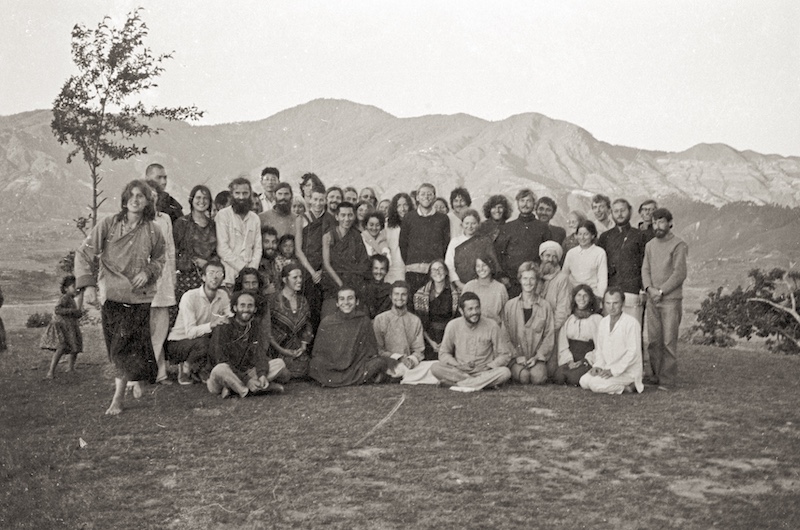
I’ve told what happened next in the 2012 Mandala article Publishing the FPMT Lineage, the LYWA multimedia series My First (Second and Third) Trip to Lawudo, and the 1979 Tibetan Review article On Becoming a Monk.
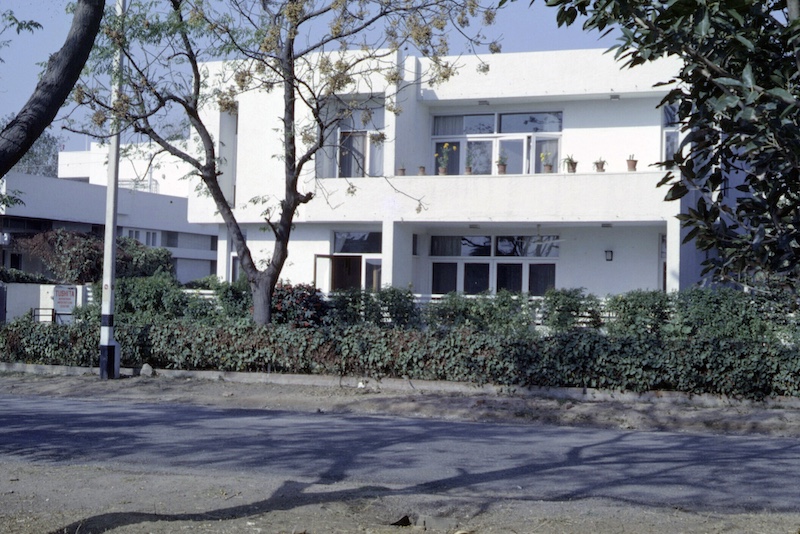
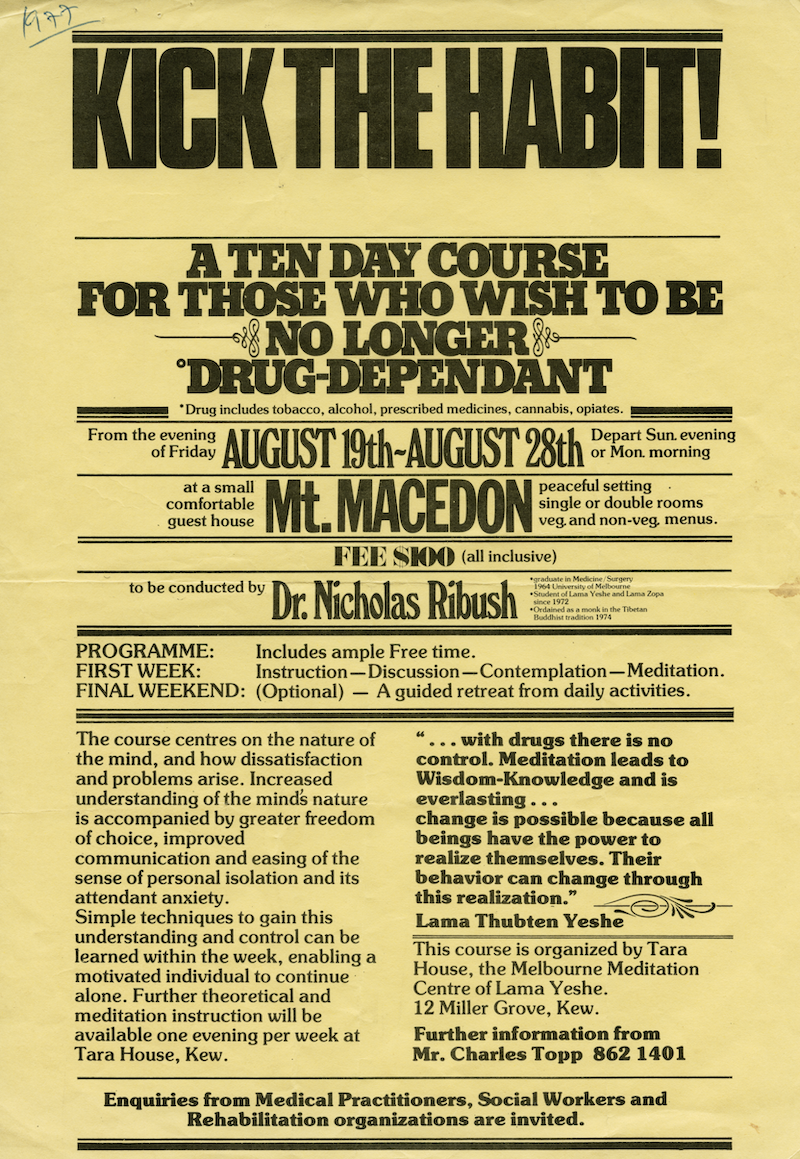
Briefly, in 1973 I established FPMT publishing at Kopan and, as above, in 1975 co-founded Wisdom Publications with Lama Yeshe. In Bodhgaya in January 1974 I was part of the first International Mahayana Institute novice group ordination and became the IMI’s first director. I described some of my 1975 experiences above. What I didn’t mention there was that upon our return to India I received full (gelong) ordination from Tsenshab Serkong Rinpoche at Tushita Dharamsala. In 1976 the IMI monks and nuns were unable to renew their Nepalese visas and all fifteen of us had to go to Dharamsala, where I established the Inji Gompa for us to do retreat that summer. In January 1977 Lama told me to go to Delhi to start Tushita Mahayana Meditation Centre (with neither students nor money). It took a couple of years but by May 1979 we were up and running. During these years Lama also had me going to the West to lead courses for people who were drug dependent. In 1978 Lama moved Wisdom Publications to Manjushri Institute in England and in 1981 appointed me editorial director, even though I was still in India. That year Lama also asked me to run the first Enlightened Experience Celebration, which took place in Bodhgaya and Dharamsala from January through June 1982.
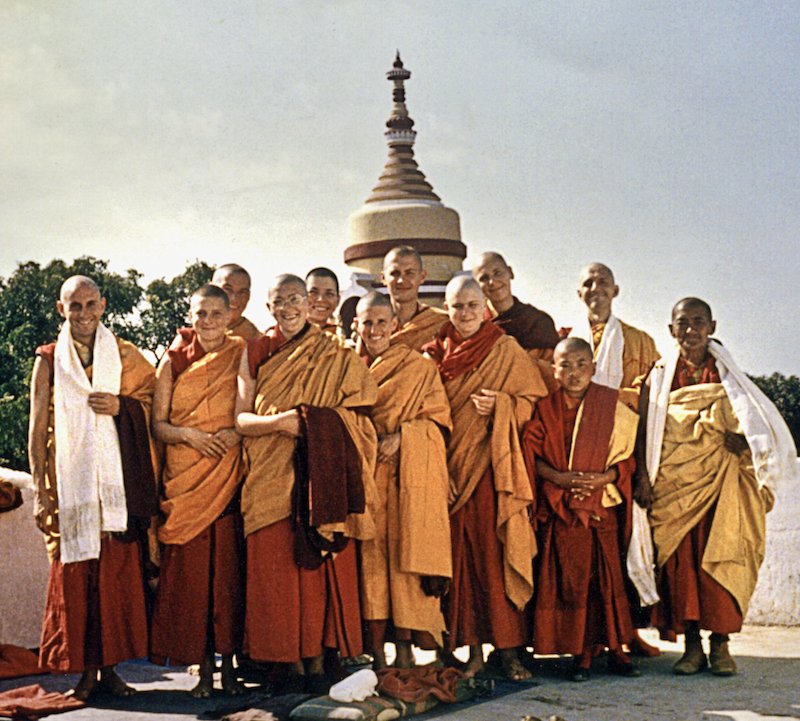
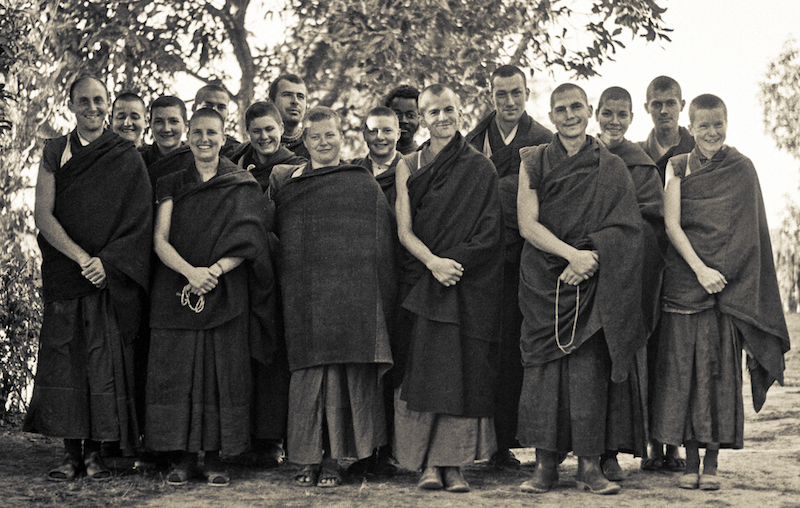
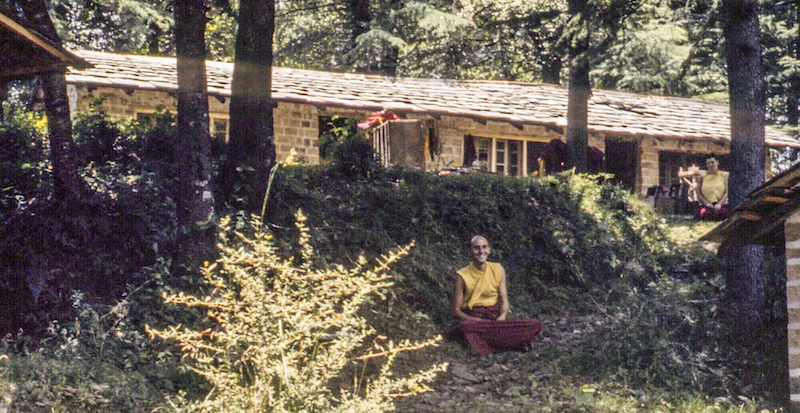
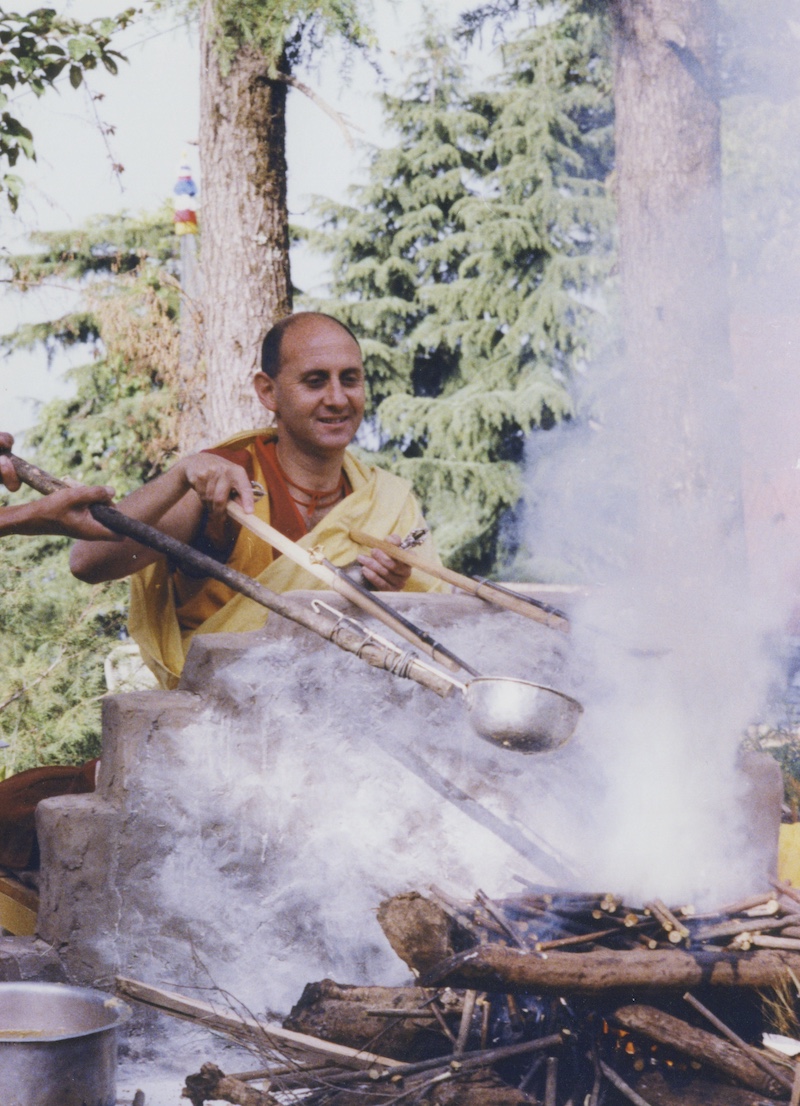
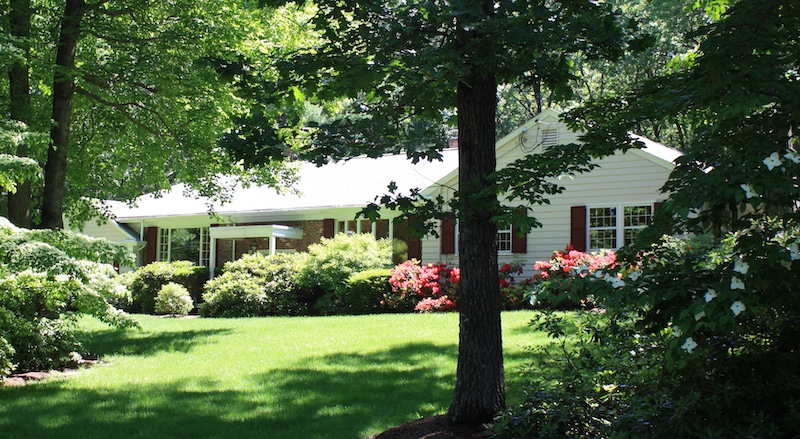
In 1983 we moved Wisdom to London and I left Tushita to take over. At that time Lama created the FPMT board of directors, of which I became a member. A year later, Lama passed away and after his cremation we asked Rinpoche to take over running the FPMT, which he eventually agreed to do! I disrobed in London in 1986. In 1989 we decided to move Wisdom to Boston, where I became editorial director again. That September, Rinpoche asked me to start Kurukulla Center, which I did, and was KKC’s director for its first four years. I was also KKC director again for six months in 2002 and for two years, 2008–10. In 1996 I left Wisdom to start the Lama Yeshe Wisdom Archive in Boston, and nearly thirty years later I’m still here, the longest I’ve ever done anything in my entire life!
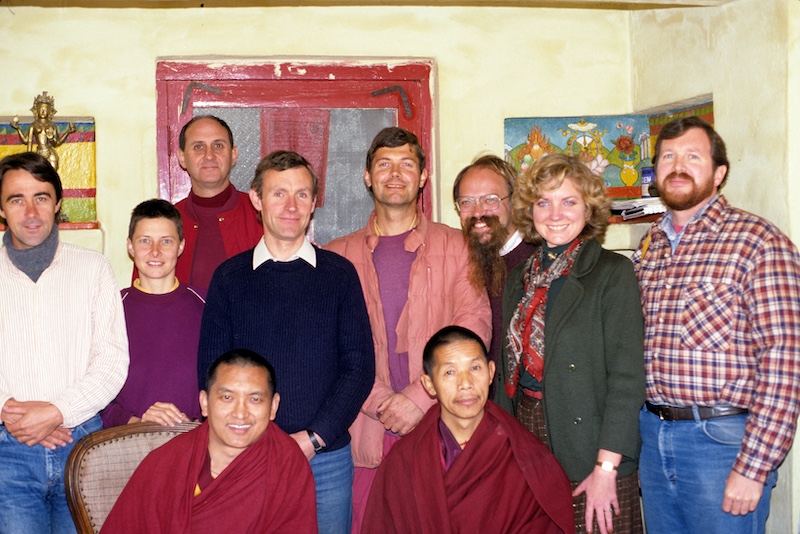

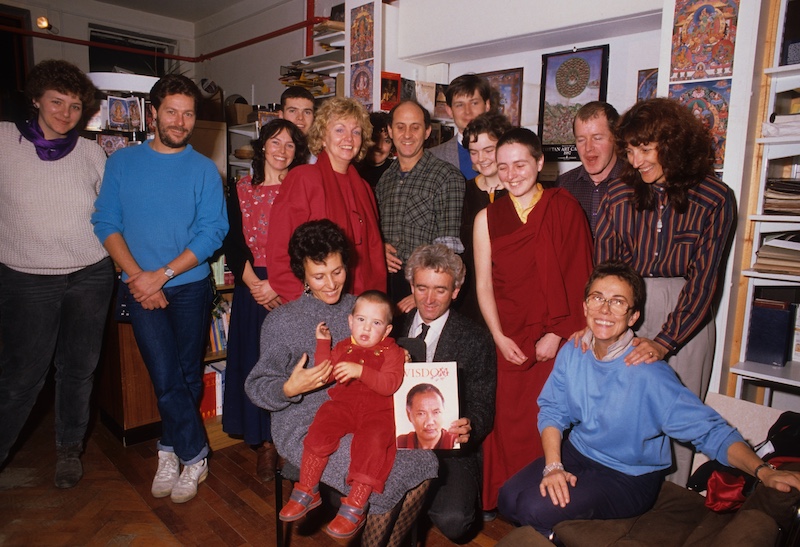
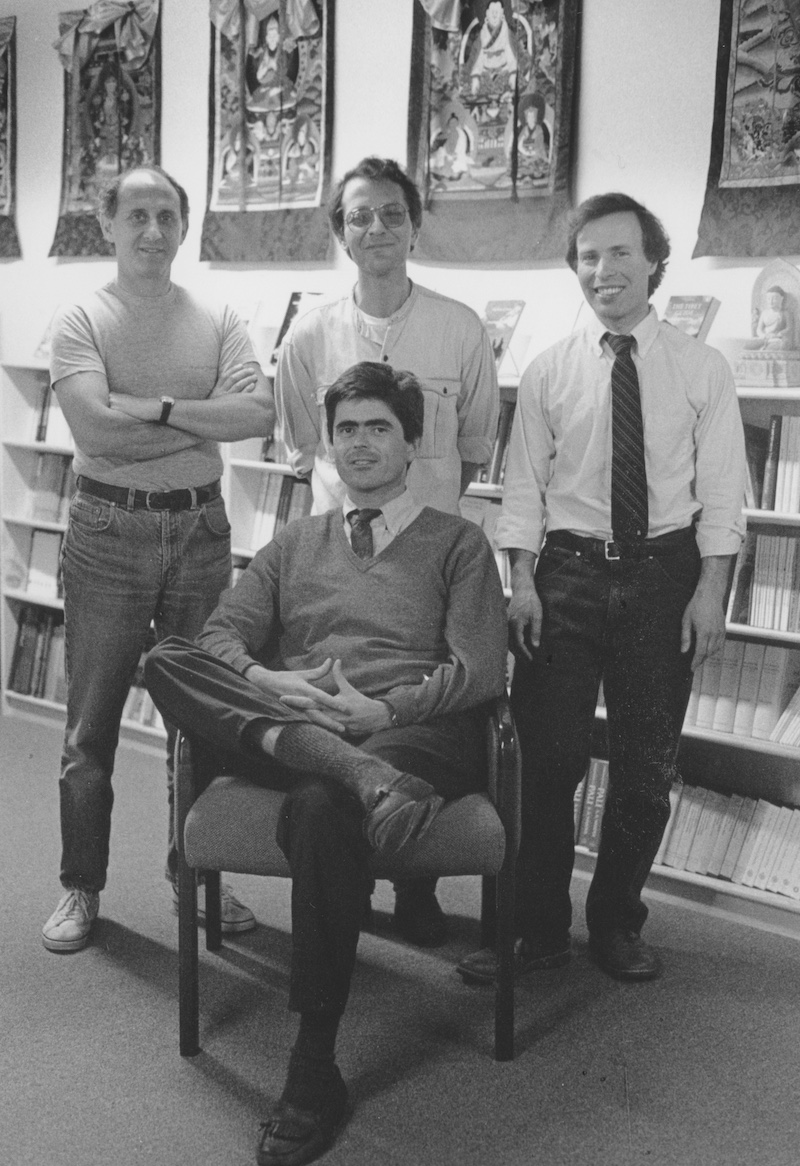

Of course, I’m nowhere near the only one. Many other FPMT students from the 1970s have also served the Lamas, the Dharma and all sentient beings through their devotion to this beautiful organization that Lama Yeshe and Lama Zopa Rinpoche have bequeathed to us, and I rejoice in their efforts. I also encourage newer FPMT students to take a literal leap of faith and dedicate themselves fulltime to the Dharma. It’s the only thing that makes sense. Then, we all need to work together harmoniously to make sure we preserve this precious gift for centuries to come. If we do, the Dharma will surely look after us.
[1] These teachings will be published in 2026 or 2027.
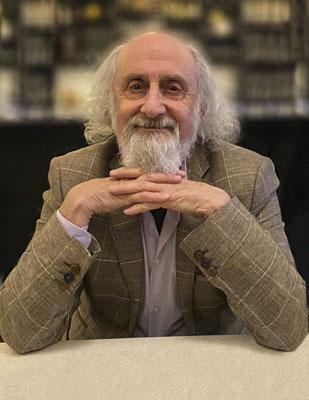
Dr. Nicholas Ribush, MB, BS, is a graduate of Melbourne University Medical School (1964) who first encountered Buddhism at Kopan Monastery, Nepal, in 1972. Since then he has been a student of Lama Yeshe and Lama Zopa Rinpoche and a full time worker for their international organization, the Foundation for the Preservation of the Mahayana Tradition (FPMT). Please see LYWA director’s page for more information and various articles Nick has written over the years.
Visit LamaYeshe.com to explore more Dharma
Connect with LYWA
Facebook | Bluesky | Instagram | Youtube | Pinterest | Threads
 LYWA Multimedia